.png?lang=en-US&ext=.png)
.png?lang=en-US&ext=.png)
CSWE's 70th Annual Program Meeting (APM)
2024 Annual Program Meeting
The Council on Social Work Education's (CSWE) 70th Annual Program Meeting was held October 24-27, 2024 in Kansas City, MO. The theme was "Indigenous Knowledge, Sovereignty, and Environmental Justice," and featured social work education presentations, an exhibit hall, and networking opportunities. View photos from the event. Thank You for a Fantastic Meeting!
Preconference Institutes
Five preconference institutes were held on October 23-24, 2024:
- The Center for Diversity Preconference Institute
- Leadership Development Institute
- Field Education Institute
- Assessment Institute
- Student Summit
Speakers
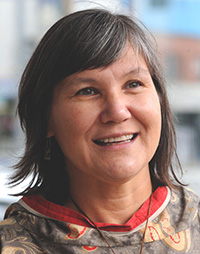 Valerie Nurr’araaluk Davidson
Opening Plenary Speaker
Valerie Nurr’araaluk Davidson, Yup’ik, has enjoyed a distinguished career in health care administration, policy, governance and advocacy. Davidson most recently served as President/CEO of the Alaska Native Tribal Health Consortium, the first woman to serve in that role. Davidson previously served as the first woman President of Alaska Pacific University.
Davidson is an enrolled tribal member of the Orutsararmiut Traditional Native Council. She was the first Alaska Native woman to serve as Lieutenant Governor of Alaska when her strength as a leader was needed to steady our state after the abrupt resignation of her predecessor. Davidson was appointed by Governor Bill Walker in December 2014 to serve as Commissioner of the Alaska Department of Health & Social Services. While there, her visionary leadership and ability to manage difficult dialogues, diverse leaders and teams, and critical issues made it possible to implement expanded Medicaid coverage to over 70,000 Alaskans, implement Medicaid Reform and negotiate the first Alaska Tribal Child Welfare Compact with 162 Alaska Tribes, the first of its kind in the nation.
Davidson previously worked for over 15 years as a national policy maker on matters affecting Self-Determination, Self-Governance, and Indian health and well-being. As Senior Director of Legal and Intergovernmental Affairs for the Alaska Native Tribal Health Consortium, she represented Alaska Native communities and health needs at federal, state, and community levels. Davidson was also the spokesperson, chief political and legal strategist for ANTHC’s Dental Health Aide Therapy Program, the country’s first mid-level dental program.
Davidson served for 11 years as the Technical Co-Lead Negotiator of the Alaska Tribal Health Compact, a unified federal compact on behalf of 229 Tribes in Alaska. Davidson previously served as Chair of the national Tribal Technical Advisory Group to the Administrator of the Centers for Medicare & Medicaid Services under both Democratic and Republican administrations from its inception in 2004 until 2014. Davidson also served on the U.S. Department of Justice Advisory Committee on American Indian and Alaska Native Children Exposed to Violence. A key component of her leadership was to help define multiple innovations to ensure Native peoples and our communities receive the best utilization of our government-to-government relationship and the federal trust responsibility. She also broadened this to work effectively with private philanthropy and other champions who could support this critical work.
Davidson currently serves as Trustee of the First Alaskans Institute, Commissioner of the Lancet Commission on Arctic Health, member of the Executive Advisory Committee of the Alaska Native Collaborative Hub for Research on Resilience, and member of the Foraker Group Governance Board. Davidson also serves on the Founder’s Council of the United States of Care, a bipartisan organization dedicated to ensuring that every American has access to quality, affordable health care regardless of health status, social need, or income.
Davidson earned a Bachelor of Education with a specialty in Early Childhood Education and a minor in Bilingual Education from the University of Alaska Southeast and a Juris Doctor degree from the University of New Mexico School of Law. She has deployed her education and commitment to her Native peoples and Alaska to advance a collective and holistic approach to Self-Governance and the well being for all Alaskans.
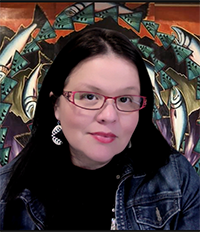 Dr. Cutcha Risling Baldy
Social Work Futures SpeakerDr. Cutcha Risling Baldy, the 2024 APM speaker on social work futures, is an Associate Professor of Native American Studies at Cal Poly Humboldt. She researches Indigenous feminisms, California Indians, environmental justice, Indigenous natural resource management, mental health and cultural interventions, and decolonization. She is the Co-Director of the NAS Food Sovereignty Lab & Traditional Ecological Knowledges Institute and recently completed a 5-year-long research study as local evaluator for a California Department of Public Health Reducing Health Disparities Project: the ACORN Youth Wellness Program with Two Feathers Native American Family Services.
In 2022–2023, she was named as Follet Chair at Dominican University. She received her PhD in Native American Studies at UC Davis; her MFA in Creative Writing from San Diego State University; and her BA in Psychology with a Specialization in Health and Development from Stanford University. She is also the volunteer executive director for the Native Women’s Collective, a nonprofit organization that focuses on the continued revitalization of Native American arts and culture.
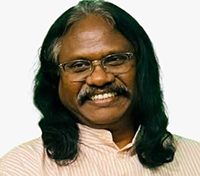 Dr. Bipin Jojo
Hokenstad International LecturerDr. Jojo is a Professor and Dean of School of Work at the Tata Institute of Social Sciences, Mumbai, India. Dr. Jojo’s lecture, “Indigenous Peoples' Knowledge for Environmental Justice: A Social Work Perspective from India”, explores the intersections of indigenous knowledge and environmental justice within the context of social work practice and education in India, offering valuable insights for US-based social work educators seeking to expand their understanding of global indigenous perspectives. Importantly, this lecture will provide US-based social work educators with a unique opportunity to learn from the indigenous peoples’ experiences in India. By engaging with global indigenous perspectives, social work educators can enrich their understanding of environmental justice and broaden their cultural competence, ultimately enhancing their capacity to effectively address the needs of indigenous communities within their own contexts.
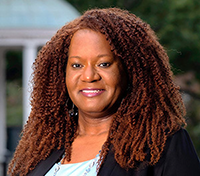 Dr. Ramona Denby-Brinson
Carl A. Scott LecturerDr. Denby-Brinson is dean and Kuralt Distinguished Professor of Public Welfare Policy and Administration in the School of Social Work at the University of North Carolina at Chapel Hill.
Dr. Denby-Brinson's lecture, “Thank God the Apple Does Not Fall Far From the Tree: It's Time to Safeguard African American Families' Legacy,” illustrates how Carl A. Scott paved the way for generations of researchers and educators who in turn transformed social work practice. The backdrop to the lecture is a discussion of the U.S. child welfare system and the experiences of minoritized children and families. Using a multipronged approach of storytelling, music, art, data visualizations, and guided imagery, the audience will be challenged with the following proposition: Social movements of late might be well-served by an examination of our past practices.
Dr. Denby-Brinson has more than 30 years of experience in social work education and 20 years in administration. She completed her PhD at The Ohio State University. Prior to her academic career, she served children and families in various social service settings. Her scholarly interests include policy, programming, and treatment issues relevant to children and families, child welfare, children’s mental health, and culturally specific service delivery. Dr. Denby-Brinson is a nationally recognized expert in culturally adapted child welfare services. She has published extensively about kinship care, as well as the mental health and well-being of African American children who are foster-care-system involved.
She has been funded significantly from federal, state, and private sources to conduct research related to child and family well-being. Her work is articulated in peer-reviewed journal articles, books, chapters, technical reports, issue briefs, media presentations and professional papers and presentations. She has been active in several national social work professional associations, including the National Association of Social Workers, Council on Social Work Education, and the Society for Social Work and Research. Dr. Denby-Brinson has received numerous accolades for her scholarship and impact on the field, including the 2014 Harry Reid Silver State Research Award for her highly respected research that is responsive to the needs of local and national communities.
Awards
2024 Professional Recognition Awards
The Professional Awards are among CSWE’s highest honors and recognize outstanding educators for significant contributions to social work education.
- Field Education/Practicum Excellence in Innovation Award: Bethel University Department of Social Work.
- Significant Lifetime Achievement in Social Work Award: Cathryne L. Schmitz, PhD, MSW,
- Established Faculty Service and Leadership in Social Work Education Award: Barbara W. Shank , PhD, MSW
- Early Career Faculty Service and Leadership in Social Work Education Award: Karen A. Johnson, PhD, MSW
- Distinguished Recent Contributions to Social Work Education Award: Sabrena Jackson, PhD, MSW
Location Awards
The Annual Conference Location Awards recognize the extraordinary impact of local leaders and organizations in the community which we hold our CSWE annual conference. The 2024 CSWE Location Awards recognized the exceptional leadership within the Kansas City, MO, community and the significant impact of these organizations at local, national, and global levels.
- Individual Champion for Social Justice Award: Jimmy Lee Beason II, MSW
- Community Impact Award: Principal Chief Judith ‘Trǫnyáęhk’ Manthe
- Kansas City Community Engagement Partner Award: Kansas & Western Missouri Salvation Army
Commissions and Councils Awards
Every year CSWE commissions and councils honor and celebrate social work scholars, students, and educators for their contributions to social work and social work education.- Two-Spirit, Queer, and Trans People of Color (2-QTPOC) Social Work Impact Award: No awardee for 2024
- Sexual Orientation and Gender Identity and Expression Scholarship Award:
- Vern Harner, PhD
- Boi Casillas, MSW, CNA
- Jess Chrivoli, MSW
- Erin Harrop, PhD, LICSW
- Megan Moore, PhD, MSW
- Amaranta Lopez Olivares, MSW, LSWAIC
- Council on Diversity and Social & Economic Justice Community Partnership Action Award:
- Utah State University's Transforming Communities Initatiave
- Council on the Role and Status of Women in Social Work Education (CORSW) Community Impact Award:
- Dr. Laquetta Solomon
- CORSW Feminist manuscript Award:
- Kenyette S. Garrett, LCSW
- Kate M. Chaffin, DSW
- Chesney Ward, PhD, MSW, LCSW
- CORSW Student Feminist Manuscript Award:
- Courtney Cronley, PhD, MSW
- CORSW Violence Against Women and Children Manuscript Award: No awardee for 2024
- Council on Racial, Ethnic, and Cultural Diversity Award:
- Cheryl Aguillar, LICSW, LCSW
- Council on Disability and Persons with Disabilities Disability Manuscript Award:
- Aesha John, PhD, LMSW
- Jade Presnell, MS, LSW
- Partners in Advancing International Education Awards:
- Individual Award Winner: Professor Rebecca L. Thomas, PhD, MSW
- Organization Award Winner: Gold Coast Medical Foundation
- Student Award Winner: Elvia Y. Mata Ortega, IHM
2024 APM Social Work Tracks
APM presentations are organized by tracks, allowing meeting participants to quickly locate and gauge their interest in specific sessions.
|
|
Land Acknowledgment Statement
CSWE acknowledges that we are on the ancestral lands of Indigenous Peoples from time immemorial. Indigenous Peoples once had and continue to have extended networks of relatives that include human and nonhuman life, as well as the seen and the unseen across diverse geopolitical and ecological spaces. CSWE recognizes and respects all Indigenous Peoples, their histories, their sovereign political rights, and their sacred ties to the land and waters. Read more.