.png?lang=en-US&ext=.png)
.png?lang=en-US&ext=.png)
Published on : January 7, 2026
Where Social Work Begins: Spotlighting the Impact of the BSW Degree
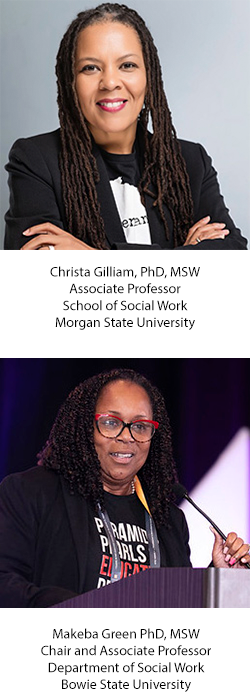 CSWE is celebrating the value and versatility of the bachelor’s degree in social work (BSW) by profiling students and graduates, faculty, and other professionals. The BSW degree is the foundation of social work education and a powerful pathway for students considering a career grounded in service, social justice, human dignity, and integrity.
To kick off this important BSW Spotlight Series, we spoke with Christa Gilliam (PhD, MSW) and Makeba Green (PhD, MSW), two experienced social work educators and leaders, about why BSW programs matter, how visibility affects student recruitment, and the return on investment for a BSW degree. They shared insights and advice for students who want to contribute in meaningful ways to healthy and thriving individuals, families, and communities. This interview has been edited for length and clarity.
Q. What impact do you think increased visibility for BSW programs and graduates can have on attracting students to the field of social work?
- GILLIAM: Increased visibility of BSW programs helps students and emerging scholars recognize social work as a dynamic, value-driven field where they can make a tangible impact early in their careers.
- GREEN: Greater visibility helps the public understand the purpose, relevance, and career potential of the BSW degree. It dispels myths about the profession and answers common questions, such as career options, earning potential, and how social work differs from psychology or counseling. Showcasing the stories and successes of BSW graduates helps prospective students see themselves in the field and encourages those who share social work’s values to enthusiastically choose the major with confidence.
- GILLIAM: The BSW builds transferable skills such as critical thinking, cultural humility, advocacy, and ethical decision-making—skills that apply across human-centered and helping professions.
- GREEN: The BSW equips students with a broad set of knowledge, values, and skills applicable across multiple fields. Graduates are trained to engage effectively with individuals, families, groups, and communities preparing them for success in both traditional social work roles and diverse professional settings.
- GILLIAM: BSW graduates thrive in corporate human resource roles, community development, public health outreach, policy advocacy, and nonprofit leadership.
- GREEN: One of our graduates has launched private licensing and training businesses that support other social workers. Another worked in a university TRIO program helping first-generation college students. Several have pursued and completed nursing degrees, some have become probation officers or worked in criminal justice, and one of our graduates has excelled as a special education teacher.
- GILLIAM I’ve had a BSW graduate from my previous institution, Coppin State, elected to city council, a BSW graduate from Morgan State promoted to a nonprofit director position, and many others who have stepped into critical public service roles. Another student created a low- to no-cost haircutting and barbering service for the campus and surrounding community, while another mobilized civic engagement by registering students to vote and providing education around the voting process.
- GREEN: Our graduates frequently demonstrate the meaningful ways they are impacting their communities and careers, whether by hiring BSW students for gap-year roles before they pursue an MSW, serving as field instructors, or dedicating their careers to supporting students. Alumni have become directors, community organizers, field directors, licensed professionals, and doctoral scholars. Others have returned to their home communities to lead change where it matters most. Their continued commitment to service reflects the enduring value of a BSW education.
- GILLIAM: Students should know the degree requires critical thinking, self-reflection, cultural awareness, and a commitment to social justice in practice.
- GREEN: Students pursuing a BSW should have a genuine passion for serving others. Social work is a call to action, one that involves advocating for vulnerable populations, acting as change agents, and influencing policy to improve community well-being.
- GILLIAM: If they feel called to advocate, uplift communities, and lead with compassion, social work offers a meaningful pathway aligned with those values.
- GREEN: Ultimately, that’s a decision that's going to be guided by personal values, career goals, and research. I would advise anyone thinking about pursuing a BSW to talk with practicing social workers about their experiences. It would be a good idea to research job qualifications and employment opportunities. If they are still interested after that, then I’d suggest they explore at least three BSW programs of interest.
- GILLIAM: Successful BSW students typically exhibit passion for advocacy, curiosity, compassion, and a strong commitment to equity and community well-being.
- GREEN: Strong BSW students are passionate about humanity, social justice, and working with diverse populations. They show empathy, communicate effectively, and look beyond challenges to understand the whole person. They are comfortable not having all the answers but are committed to collaborating and finding solutions.
- GILLIAM: The ROI comes through diverse career opportunities, leadership development, and the personal fulfillment of creating positive social change.
- GREEN: The return on investment is multifaceted. Graduates bring meaningful change to their communities, contribute to the institutions that shaped them, and experience personal growth by helping others thrive. Career opportunities are broad and flexible ranging from community organizations and leadership roles to consultation and interdisciplinary teams.
Makeba Green, PhD, MSW, is the chair of and associate professor in the Department of Social Work at Bowie State University.
Both have served as the Undergraduate Program Representative on the CSWE Board of Directors.