.png?lang=en-US&ext=.png)
.png?lang=en-US&ext=.png)
Award: Field Education/Practicum Excellence in Innovation
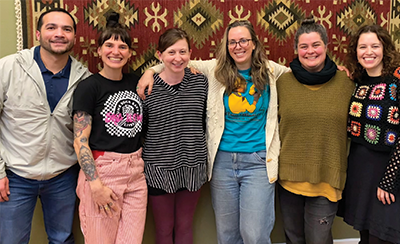 The University of Montana School of Social Work’s Field Education Program has developed a relationship-centered, placebound, and justice-oriented model of practicum education designed to expand equitable access to social work education across Montana, the broader Rocky Mountain West, and geographically isolated communities.
Serving a geographically vast, largely rural, and significantly Indigenous region, the program is grounded in a simple but profound commitment: students should not have to leave their communities to become social workers. In response to longstanding barriers related to relocation, financial strain, caregiving responsibilities, and limited local practicum infrastructure, the program has intentionally developed flexible and community-responsive field education pathways that allow students to remain rooted in their home communities while engaging in meaningful, competency-based learning. The program views field education not only as a training requirement, but as an opportunity to strengthen local communities and workforce capacity while reducing educational and geographic displacement.
UMSSW’s Field Education Program supports BSW and MSW students across diverse practice settings through long-standing partnerships with tribal and rural colleges, community agencies, Agency Field Instructors, outside supervisors, and organizations providing both in-person and remote services. Students take an active role in identifying and shaping practicum opportunities through a self-directed placement process that emphasizes collaboration and alignment between student learning goals and community needs. Field education faculty regularly work alongside students to navigate the realities of rural practice, including limited placement options, dual relationships, transportation barriers, and the need for flexible and creative practicum design.
Recognizing the realities of rural and remote practice, the program has developed robust remote placement, clinical placement, and supervision policies that balance accessibility with strong educational standards. When local placement options are limited, the program works collaboratively with students and agencies to create competency-aligned practicum experiences that honor local context and community relationships while expanding access to learning opportunities. The program has also intentionally developed partnerships with organizations such as Crisis Text Line, Parents Helping Parents, and other agencies providing accessible remote services across geographically isolated communities.
A central focus of the program has been the expansion of paid practicum opportunities and workforce development pathways. Through employment-based practicums, educational stipends, agency partnerships, and advocacy efforts supporting grant-funded student compensation, the program seeks to reduce financial barriers while strengthening local systems of care. In addition, a dedicated group of compensated outside BSW and MSW supervisors provides supplemental supervision to students in communities without on-site social workers, increasing access to placements that might otherwise not be feasible.
Professional development and relational support remain central to the program’s approach. Annual Agency Field Instructor trainings, Justice, Equity, Diversity, and Inclusion (JEDI) learning sessions, and student-focused professional development initiatives support ethical supervision, reflective practice, intercultural responsiveness, and justice-centered social work education. Recent learning topics have included trauma stewardship, disability equity, neurodiversity, intercultural communication, anti-racist organizational practice, supervision development, and justice-centered approaches to clinical social work. Across all aspects of the program, relationships are not viewed as secondary supports to learning - they are central to the learning process itself.
At its core, the University of Montana School of Social Work’s Field Education Program is committed to the power of place, community partnership, and diverse ways of knowing. By investing in accessible, community-engaged, and socially responsive field education, the program strives to prepare engaged, compassionate, and justice-oriented social workers while strengthening the communities in which students live, learn, and serve.