-
Significant Lifetime Achievement in Social Work Education
Elaine Congress, MSSW, MA, DSW, LCSW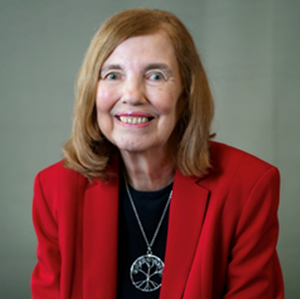 Elaine Congress, MSSW, MA, DSW, LCSW, is a Professor and Associate Dean at Fordham University Graduate School of Social Service in New York City.
Dr. Congress began her social work career working in a mental health clinic in Brooklyn, primarily serving recent immigrants to the U.S. In addition to providing counseling services for this vulnerable population, she also provided information about community and government resources.
For more than three decades, Dr. Congress has served has a faculty member at Fordham University, working under distinguished deans Mary Ann Quaranta, Peter Vaughan, and Debra McPhee. She has taught classes in clinical social work, family oriented social work, and supervision. Most recently, Dr. Congress has taught macro social work to Fordham’s MSW students. Her students are developing skills that include connecting with major international programs and United Nations, as well as in speaking and organizing local, national, and international conferences and events. At the United Nations, Dr. Congress has represented the International Federation of Social Work (IFSW) and the Institute for Multicultural Counseling and Education Services (IMCES).
Dr. Congress is a prolific author, having written more than a dozen books on social work ethics, migrants, women, children, non-profit leadership, health, international themes, and social work education.
She serves on the Executive Committee of the Psychology Coalition at the United Nations (PCUN) and as Chair of the Publications Committee. As a leader of the Institute of Women and Girls, Dr. Congress has hosted conferences and events on family violence, maternal mortality, post-partum depression, and menopause. Dr. Congress has served as President of the New York City chapter of the National Association of Social Workers (NASW), as well as on the NASW’s national board of directors. She also chairs the social work section of the New York Academy of Medicine and serves on the social work board for the American Public Health Association.
-
Distinguished Recent Contributions to Social Work Education
April Lavette Jones, LMSW, PhD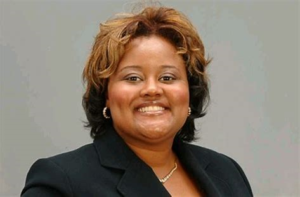 Dr. April Lavette Jones, LMSW, PhD, M.Ed., MS, MSW, BA., is a nationally engaged social work educator, organizational psychologist, licensed master social worker, scholar, and higher education leader whose work advances innovation, equity, and excellence in social work education. She currently serves as Department Chair of Social Sciences at Talladega College, overseeing Social Work, Criminal Justice, and Sociology.
Previously Dr. Jones served as Associate Professor and Director of Field/Practicum Experience at Bellevue University, where she contributed expertise in online learning, field education, accreditation alignment, instructional design, and technology-enhanced student success. Before joining Bellevue, Dr. Jones served at Tuskegee University from July 2018 to February 2026, including as Department Head/Chair of Social Work, and earned tenure and promotion to Associate Professor in 2024. Her leadership strengthened curriculum, faculty development, accreditation readiness, field education infrastructure, student support systems, and online program growth, contributing to external recognition of program quality and workforce relevance.
Dr. Jones helped develop and expand innovative undergraduate and graduate social work learning pathways, including the online MSW program, telehealth coursework, embedded telebehavioral health certificate opportunities, and the first distance-learning MSW course in Data Science and Analytics. She is recognized for integrating artificial intelligence, simulation, data science, telehealth, and culturally responsive pedagogy into social work education while maintaining strong grounding in ethics, CSWE competencies, academic integrity, and human-centered practice.
Her recent work includes AI-enabled instructional supports, practicum and capstone coaching tools, student-facing ethical AI guidance, and curriculum models that incorporate EPAS 2022, licensure preparation, trauma-informed principles, ADEI, and Afrocentric/BIPOC-centered clinical practice. She also advanced student wellness and crisis-responsive education through policies and practices supporting mental health, self-care, and trauma-informed campus response.
Dr. Jones’s scholarship and presentations address culturally responsive teaching, global social work education, mixed reality simulation, mental health, social justice, organizational behavior, and emerging technologies in social work education. She is a contributor to the first textbook on Financial Social Work: Micro, Mezzo, and Macro Practice by Reeta Wolfsohn and Matthew L. Schwartz and is among the first to offer the course in a MSW program curriculum. She is a contributing author to CSWE’s Military and Veteran Social Work Curriculum Guide and has served CSWE as a Board of Directors BSW Program Representative, Awards Committee representative, and site visitor. Her professional recognitions include national acknowledgment from the Association of Baccalaureate Social Work Program Directors for excellence in social work education leadership.
Across more than two decades in higher education, behavioral health, government, military, disaster recovery, and community-based settings, Dr. Jones has demonstrated a sustained commitment to building programs, partnerships, and policies that expand opportunity, support student wellness, and strengthen the profession. Notably, she was recognized by the Alabama Commission on Higher Education for her support of the passage of legislation HB56: Board of Social Work Examiners, Scope of Practice of Licenses to facilitate Alabama’s Clinical Social Workers ability to meet mental health needs of all Alabamians. Her leadership reflects the values of social work education: innovation, service, ethical practice, equity, resilience, and preparation of the next generation of social workers.
-
Established Faculty Service and Leadership in Social Work Education
Patricia Saleeby, PhD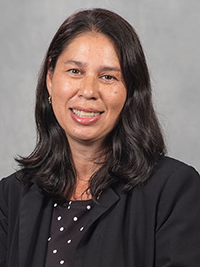 Dr. Patricia Welch Saleeby is a Full Professor and MSW Program Director in the Department of Sociology, Criminology, and Social Work at Bradley University. She earned a PhD in Social Work from Washington University in St. Louis, a Master of Science in Social Administration from Case Western Reserve University, and a Bachelor of Arts in Biology from Oberlin College.
She has dedicated over two decades to leadership roles within social work national and international organizations. Her extensive service to the Council on Social Work Education includes serving two times on the Board of Directors, recently as Treasurer, and as a member of the BOD Executive Committee – Chairing Governance, Budget, and Audit Committees. She has served on the CSWE Strategic Planning Committee, and she has been a speaker for the Minority Fellowship Program as well as an accreditation site visitor for several years.
Dr. Saleeby has contributed actively to promoting diversity within social work. She served as the Chair of the Commission for Diversity and Social and Economic Justice contributing to various work tasks that led to the establishment of the Diversity Center. She chaired the Council on Disability and Persons with Disabilities and served on the Commission on Global Social Work Education along with the Environmental Justice and Service User Competency Task Forces.
Beyond CSWE, Dr. Saleeby serves as the Editor-in-Chief of Health & Social Work journal for the National Association of Social Workers and maintains global leadership roles, including representing the International Federation of Social Workers (IFSW) at the United Nations in New York and co-chairing the World Health Organization (WHO) Functioning and Disability Reference Group. She is also an active member of the NASW-IL Deans and Directors.
Dr. Saleeby brings decades of rich teaching experience across undergraduate and graduate social work education, navigating diverse rural, urban, and suburban institutional settings. A dedicated mentor and academic leader, she has been instrumental in shaping the next generation of social workers by driving curriculum development and programmatic excellence. Reflecting her specialized non-profit management background, she has passionately championed student readiness, advocating for systemic integration of macro skills, including grant writing and fundraising, directly into social work curricula.
Not surprisingly, Dr. Saleeby’s research and scholarship emphasize enhancing and promoting the social work profession. One area focuses on disability studies and global health policy, where she is internationally recognized for bridging the gap between social work interventions and international standard frameworks. She was a pioneering professional – and the only social worker – involved in the World Health Organization's revision process that developed the International Classification of Functioning, Disability and Health (ICF), actively working to shift the medical model of disability toward a holistic, functional perspective that recognizes the impact of the environment. Dr. Saleeby’s second area of focus explores the "capability approach" to well-being and health equity where she utilizes this framework to dismantle systemic barriers, assess social determinants of health, and enhance patient care for underserved populations. Overall, her tireless advocacy aims to construct more equitable and inclusive social systems worldwide.
-
Early Career Faculty Service and Leadership in Social Work Education
Saltanat Childress, PhD, MSW, MM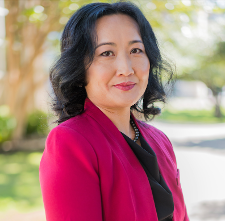 Dr. Saltanat Childress is an Associate Professor at the University of Texas at Arlington School of Social Work whose scholarship focuses on the prevention of interpersonal violence and adverse childhood experiences across the lifespan, particularly among immigrant, refugee, and underserved populations in the United States and low- and middle-income countries. Her work integrates prevention science, implementation science, and community-engaged research to address child maltreatment, intimate partner violence, family stress, and mental health disparities through culturally responsive, multilevel interventions.
Dr. Childress’s research has received national and international recognition for its innovation and impact. She currently serves as Principal Investigator of an NIH/NICHD-funded career development award focused on adapting and implementing evidence-based family and school interventions in Kyrgyzstan to prevent child maltreatment and improve child and family well-being. Her work emphasizes cross-sector collaboration, relational health, and the integration of economic empowerment approaches into prevention programming.
An active contributor to the field of social work education and prevention science, Dr. Childress serves in leadership roles within the Society for Prevention Research, including as Co-Chair of the International Committee Violence Prevention and Research Collaboration Subcommittees. She has organized and moderated international panels and symposia focused on global prevention research and immigrant and refugee communities. She is also engaged in editorial and peer-review activities for multiple scholarly journals and has received recognition for excellence in peer review, including the 2026 Families in Society Richard K. Caputo Peer Review Award and the journal’s 2025 Best Reviewer Award.
Dr. Childress’s scholarship and service have previously been recognized through several national honors, including the Council on Social Work Education’s 2021 Violence Against Women and Children Manuscript Award and the 2022 Feminist Manuscript Award. Her work has also been highlighted by the University of Texas at Arlington for advancing research on immigrant families, resilience, and well-being.
In addition to her research contributions, Dr. Childress is deeply committed to mentoring students and advancing excellence in social work education. Her teaching emphasizes experiential learning, trauma-informed practice, and the development of culturally responsive prevention and intervention skills among future social workers.
Through her scholarship, leadership, teaching, and service, Dr. Childress continues to contribute to the advancement of social work education and the development of innovative approaches to promoting family and community well-being locally and globally.
-
Field Education/Practicum Excellence in Innovation
University of Montana School of Social Work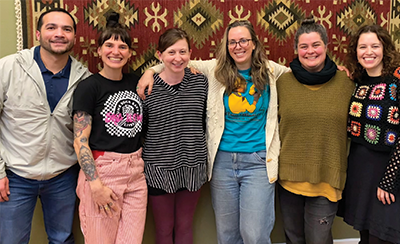 The University of Montana School of Social Work’s Field Education Program has developed a relationship-centered, placebound, and justice-oriented model of practicum education designed to expand equitable access to social work education across Montana, the broader Rocky Mountain West, and geographically isolated communities.
Serving a geographically vast, largely rural, and significantly Indigenous region, the program is grounded in a simple but profound commitment: students should not have to leave their communities to become social workers. In response to longstanding barriers related to relocation, financial strain, caregiving responsibilities, and limited local practicum infrastructure, the program has intentionally developed flexible and community-responsive field education pathways that allow students to remain rooted in their home communities while engaging in meaningful, competency-based learning. The program views field education not only as a training requirement, but as an opportunity to strengthen local communities and workforce capacity while reducing educational and geographic displacement.
UMSSW’s Field Education Program supports BSW and MSW students across diverse practice settings through long-standing partnerships with tribal and rural colleges, community agencies, Agency Field Instructors, outside supervisors, and organizations providing both in-person and remote services. Students take an active role in identifying and shaping practicum opportunities through a self-directed placement process that emphasizes collaboration and alignment between student learning goals and community needs. Field education faculty regularly work alongside students to navigate the realities of rural practice, including limited placement options, dual relationships, transportation barriers, and the need for flexible and creative practicum design.
Recognizing the realities of rural and remote practice, the program has developed robust remote placement, clinical placement, and supervision policies that balance accessibility with strong educational standards. When local placement options are limited, the program works collaboratively with students and agencies to create competency-aligned practicum experiences that honor local context and community relationships while expanding access to learning opportunities. The program has also intentionally developed partnerships with organizations such as Crisis Text Line, Parents Helping Parents, and other agencies providing accessible remote services across geographically isolated communities.
A central focus of the program has been the expansion of paid practicum opportunities and workforce development pathways. Through employment-based practicums, educational stipends, agency partnerships, and advocacy efforts supporting grant-funded student compensation, the program seeks to reduce financial barriers while strengthening local systems of care. In addition, a dedicated group of compensated outside BSW and MSW supervisors provides supplemental supervision to students in communities without on-site social workers, increasing access to placements that might otherwise not be feasible.
Professional development and relational support remain central to the program’s approach. Annual Agency Field Instructor trainings, Justice, Equity, Diversity, and Inclusion (JEDI) learning sessions, and student-focused professional development initiatives support ethical supervision, reflective practice, intercultural responsiveness, and justice-centered social work education. Recent learning topics have included trauma stewardship, disability equity, neurodiversity, intercultural communication, anti-racist organizational practice, supervision development, and justice-centered approaches to clinical social work. Across all aspects of the program, relationships are not viewed as secondary supports to learning - they are central to the learning process itself.
At its core, the University of Montana School of Social Work’s Field Education Program is committed to the power of place, community partnership, and diverse ways of knowing. By investing in accessible, community-engaged, and socially responsive field education, the program strives to prepare engaged, compassionate, and justice-oriented social workers while strengthening the communities in which students live, learn, and serve.
.png?lang=en-US&ext=.png)
.png?lang=en-US&ext=.png)