.png?lang=en-US&ext=.png)
.png?lang=en-US&ext=.png)
IN THIS ISSUE
From the MFP Team
Fellows Spotlight
MFP's Legacy
Call for 2025-26 Advisory Board Members
Update Your Contact Information
Resources
From the MFP TeamDear MFP Community, |
Fellows Spotlight
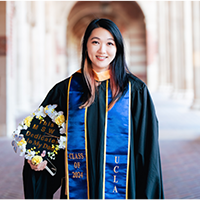 Liza Li, MSW, MBA, MA, is a 2024–2025 master’s fellow of the CSWE Minority Fellowship Program (MFP) and a recent graduate of the University of California, Los Angeles (UCLA), where she earned her Master of Social Welfare. She is currently registered as an associate clinical social worker with the California Board of Behavioral Sciences.
As a first-generation Cantonese Chinese immigrant and non-native English speaker, Liza’s educational and professional journey is a testament to resilience, cultural humility, and a deep commitment to community service. She also holds a Master’s in Educational Psychology from the University of California, Riverside, where her research focused on school bullying among Asian American and Pacific Islander (AAPI) immigrant youth, and an MBA in healthcare management, which enhances her advocacy for culturally competent Medicare home health services for AAPI older adults.
For the past 9 years, Liza has been dedicated to serving older adults across Los Angeles County. Her experience includes working in state-funded adult day Health Care centers and nonprofit mental health agencies, where she has provided direct services, led care coordination, and engaged in community outreach. Her work addresses complex aging-related challenges such as chronic illness, caregiver stress, housing instability, and social isolation—guided by a lens of cultural responsiveness, language access, and equity.
With her MSW, Liza currently works as a clinical social worker at the Senior Care Network of Huntington Health. In this role, she delivers psychosocial assessments, case management, and resource navigation for diverse older adults throughout the region. Her work empowers seniors to age in place with dignity, independence, and access to services that honor their cultural values and lived experiences.
The CSWE MFP has been instrumental in shaping Liza’s clinical identity and leadership development. Through intensive training, mentorship, and national peer support, she has deepened her understanding of culturally grounded care and sharpened her focus on advancing mental health equity among marginalized aging populations.
Looking ahead, Liza plans to become a licensed clinical social worker and to develop person-centered, community-based mental health models for AAPI and immigrant elders. She envisions a future in which older adults are empowered, respected, and supported at every stage of aging.
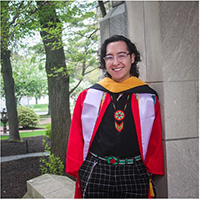 Matteo Montero-Murillo (he/him/él) MSW, is a 2024–2025 master’s fellow with a drive to connect to humans at a clinical and educational level. Matteo channels his lived experience in his social work practice with LGBTQ+, BIPOC, and neurodivergent adults, aiming to reduce shame and to help individuals recover from harm they experienced or caused. He finds great joy helping survivors of sexual violence unlearn shame, helping neurodivergent individuals discover themselves, and supporting children of immigrants in their journey to preserving culture and independence.
Matteo earned his BA in Spanish and a minor in Women’s Gender and Sexuality Studies from Moravian University, where he completed an honors thesis on transmasculine individual’s perception of sexual education and intimacy. He earned his MSW at Boston University, where he supported Latinx HIV research on the CoHeal Lab. Matteo currently works as a Community Educator for Women Against Abuse in Philadelphia, PA. As a community educator, Matteo teaches and develops curriculum to adults and youth regarding domestic violence and intimate partner violence as a means of community prevention, drawing from his experience providing counseling to LGBTQ+, BIPOC, and disabled communities. He is in the process of obtaining continued part-time employment to work as a therapist for LGBTQ+ adults. Matteo also intends to earn his independent licensure at his own pace, taking his own advice that he often gives to his clients: “It’s a marathon, not a race”. He hopes that after spending time in the community as an educator, he will have more intimate knowledge of the lives of those he will be providing mental health counseling to. He aims to one day return to higher education as a college mental health counselor and even as an educator to social work students. Matteo hopes to bridge the gap between social work education/practice and BIPOC, LGBTQ+, and disabled experiences.
Without CSWE’s MFP, Matteo wouldn’t have been able to successfully transition into working in the social work field, and he would never have met such a compassionate cohort. The MFP showed him that anyone can be a social worker, and anyone is capable of connecting with others. As an autistic and gay trans Latino, several barriers were up against him as a first-generation graduate student, but the MFP was able to dissolve many of them. He is forever grateful for the lifetime of connections and support that the MFP has provided to him and many other social workers.
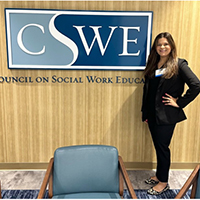 Bobbi L. Fields, MSW, LCSW, is from Robeson County, NC, and an enrolled member of the Lumbee Tribe of North Carolina. She is in her last year of her doctoral program at the University of St. Thomas with an expected graduation date of May 24, 2026. Bobbi was designated as the Barbara W. Shank scholar from 2023–2025 for commitment to serving Indigenous populations. Bobbi also earned a Bachelor of Science in Psychology and Master of Social Work at the University of North Carolina at Pembroke.
Bobbi is a clinical social worker with experience in permanency planning, behavioral health, mitigating truancy for Indigenous children and youth, and higher education. She previously served as the lecturer/director of field education for 2.5 years and is now transitioning to a tenure-track line in the Department of Social Work at the University of North Carolina at Pembroke. Bobbi is deeply passionate about perinatal mental health within the BIPOC community, specifically within Indigenous populations. She is involved in several research initiatives to address disparities related to perinatal mental health in majority minority and lower-income communities. Bobbi has developed a culturally responsive perinatal screening model to improve the screening and treatment processes for perinatal mental health.
Bobbi is deeply grateful to be a 2024–2025 doctoral fellow. The Minority Fellowship Program (MFP) is the essence of education serves as a transformative, liberating experience. The MFP has provided culturally responsive programming, mentorship, and connections to alumni and current fellows that understand why representation is so important. There are not enough words to express how impactful CSWE’s MFP has been for her. As she moves forward in her career, Bobbi is committed to developing and implementing culturally responsive screening and treatment for perinatal mental health.
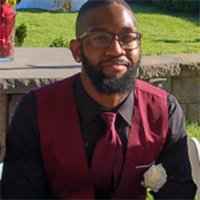 Taheem Thomas, LCSWA, MSW, in his own words: My journey into social work began with a deep commitment to supporting vulnerable populations. I earned my Bachelor of Science in Criminal Justice from East Carolina University in 2020, which sparked my interest in systems reform and advocacy. From there, I pursued my Master of Social Work at North Carolina State University, where I also served as a graduate research assistant. In that role, I contributed to research on the role of empathy in clinical care settings, as well as the importance of voting access and civic engagement in underprivileged populations.
Currently, I work as a therapist at KidsPeace, where I provide mental health services to foster children and adolescents. My work focuses on trauma-informed care, emotional regulation, and helping youth build healthy coping strategies as they navigate complex challenges. Prior to this role, I gained valuable clinical experience at the Durham Veteran Affairs Medical Center, where I worked with adult and geriatric veterans—supporting them through individual, group, and family therapy, crisis intervention, and discharge planning.
Throughout my career, I’ve had the opportunity to work with diverse populations across the lifespan: children, adolescents, adults, and older adults. Whether addressing substance use, trauma, housing instability, or chronic mental health concerns, my goal is always to meet clients where they are and walk alongside them toward healing and stability.
The MFP has been a cornerstone of my growth as a clinical social worker. It’s given me access to a powerful network of professionals and mentors, expanded my clinical knowledge, and created a platform for future employment opportunities. Through the MFP, I’ve been able to sharpen my leadership skills and stay grounded in a mission to reduce disparities in mental health care.
Looking ahead, I plan to become a fully licensed clinical social worker and continue building toward a career that blends clinical practice, substance use treatment, advocacy, and mentorship. My ultimate goal is to make a lasting impact in underserved communities and help shape a mental health system that is more equitable, accessible, and human-centered.
MFP’s Legacy
In 1974, CSWE’s MFP was awarded a grant by the National Institute of Mental Health to increase the number of minority doctoral students majoring in mental health research. This first award was the catalyst for the program we celebrate today. Please take time to acknowledge those who paved the way with our ongoing MFP Legacy section highlighting those fellows who first were awarded fellowship. Find information on all 15 of the 1975–1976 cohort of MFP doctoral fellows here. Below is one fellow’s biographical profile from when they were a fellow.
.jpg "EssieSeek-(1).jpg") Essie T. Seek received her master’s degree from the University of Southern California School of Social Work in 1973. Prior to this, she worked as a group worker with the Neighborhood Youth Association and as a counselor with the Kaiser Foundation Parent-Child Guidance Center in California.
Essie T. Seek received her master’s degree from the University of Southern California School of Social Work in 1973. Prior to this, she worked as a group worker with the Neighborhood Youth Association and as a counselor with the Kaiser Foundation Parent-Child Guidance Center in California.
She was employed most recently at the Institute for Child Advocacy in Los Angeles and leaves the position of project director to return to the University of Southern California to seek her doctoral degree.
Call for 2025-2026 Advisory Board Members
 Applications are now open to join CSWE’s Minority Fellowship Program (MFP) Advisory Board for 2025–2026! Advisory Board members play a pivotal role in shaping the future of social work leadership and ensuring the highest standards are upheld for the MFP Doctoral and MSW cohorts. It's a meaningful opportunity to help advance the mission of the MFP and support the next generation of social workers.
Apply by Friday, August 22! Click here to learn more.
Update Your Contact Information
Have you changed jobs in the last few years? Changed your primary email address? CSWE’s MFP relies on current contact information for our internal database, which we use to contact alumni and help us prepare our reports for the Substance Abuse and Mental Health Services Administration. Please use this link to share your updated contact information. Additionally, you are encouraged to reach out to MFP alumni you are connected with and request that they share their updated information too. Thank you in advance for supporting MFP team efforts to enhance connectedness in the MFP community.
Resources
Conference
The Addiction World Conference 2025
September 5–7, 2025
Location: Hybrid/Boston, MA
Highlighting the 2025 conference theme "Understanding Addiction: Approaches to Drug Abuse Prevention" in September, the Addiction World Conference will bring dedicated professionals together to shape a new direction in understanding, treating, and preventing addiction. Learn more and register.
Advocacy
Explore CSWE’s Advocacy Resource Hub
 Interested in advocacy work, but don’t know where to start? Check out CSWE’s Advocacy Resource Hub available to now! While still in its infancy, this Hub contains a variety of resources from organizations and individuals in higher education and related groups.
We invite you to visit the Advocacy Resource Hub and explore toolkits, templates, media coverage, suggested reading lists, data, and more, collected for social work educators’ educational and advocacy efforts.
Virtual Training
Ethics and Boundaries for Substance Use Disorder Professionals
SUD 101 Core Curriculum (2023)
The 23 modules in this 2023 curriculum provide an overview of evidence-based practices in the prevention, identification, and treatment of substance use disorders and co-occurring medical and psychiatric conditions for a variety of populations. Learn more.